×

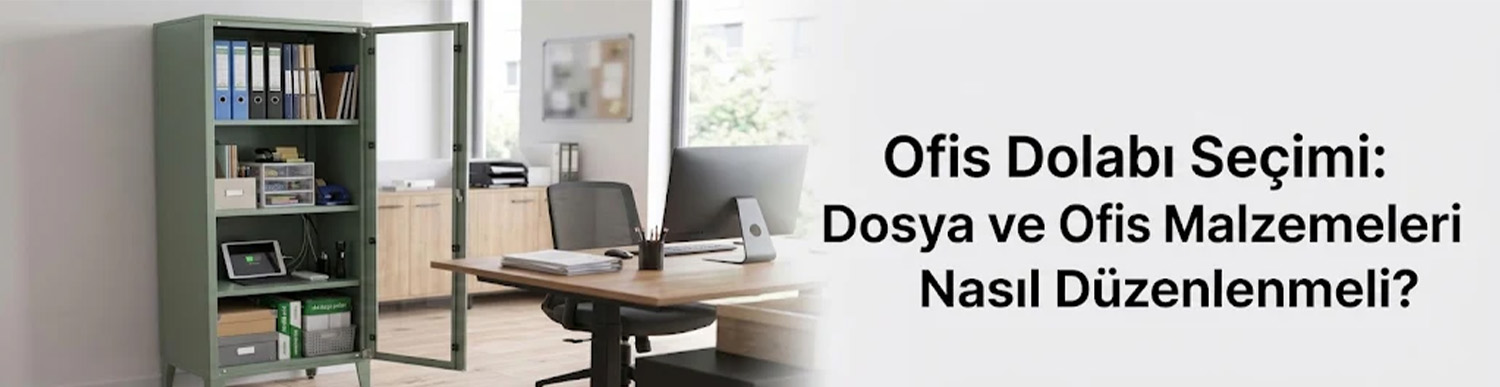
Choosing the right office cabinet helps keep files, stationery, shared equipment and personal belongings organised in the workplace. To create an effective storage system, it is important to consider the office's needs, the types of items to be stored and how frequently they are used. This guide explores the key points to consider when choosing and arranging an office cabinet.
Estimated Reading Time: 4 minutes
Storage needs in an office extend beyond files and paperwork. Stationery, shared equipment and employees' personal belongings also require organised storage space. Therefore, before choosing an office cabinet, it is important to identify which items need to be stored, where they should be kept and how often they will be used.
Grouping items according to their purpose makes it easier to create a suitable cabinet layout.
Contracts, forms, reports and working documents that are frequently used in the office should be stored in easily accessible compartments. First, determine the number of documents and folders to be stored, then plan their arrangement according to how often they are needed.
Keeping frequently used paperwork on easily accessible shelves helps employees find the documents they need more quickly. Files that are accessed less often can be organised in other sections of the cabinet.
Pens, paper, staplers, filing supplies and other stationery items are among the storage essentials shared by office employees. Keeping these materials separate from files and personal belongings makes it easier to find what is needed.
Specific shelves can be allocated for spare consumables and small items of shared equipment. This helps prevent supplies from becoming scattered across different desks.
A separate storage area can be planned for employees' bags, spare clothing and personal belongings, away from shared office supplies. Keeping these items in designated compartments helps maintain a tidier shared workspace.
The use of and access to areas designated for personal belongings should be determined according to the office's working arrangements.
When choosing a filing cabinet, it is important to consider not only the volume of documents to be stored but also how they will be categorised and how frequently they will be accessed. An organised folder layout helps reduce the time spent searching for paperwork and makes more efficient use of storage space.
If documents belonging to different departments need to be stored in the same area, they should first be separated into predefined categories. Organising paperwork from departments such as Human Resources, Accounting, Purchasing and Administration into separate groups makes document management easier.
The following points can be considered when organising files:
Group documents by department or document type.
Keep frequently used files in easily accessible sections.
Arrange less frequently used documents on separate shelves.
Keep folders belonging to the same category together wherever possible.
Create an arrangement that allows employees to access shared documents easily.
This approach helps prevent files from being placed randomly and makes it easier to maintain an organised office storage system.
Arranging folders on shelves in a consistent order makes documents easier to find when needed. When planning the shelf layout, consider folder sizes, frequency of use and document categories.
Folder labels can include identifying information such as the department name, document type or relevant period. Clear and consistent labelling helps employees sharing the same cabinet find the paperwork they need more easily.
The following practices can help create an organised shelving system:
Allocate each shelf to a specific group of documents.
Identify folders with clear, easy-to-read labels.
Keep documents belonging to the same department together.
Place frequently used folders on easily accessible shelves.
Consider the load capacity and available space of each shelf.
The position of an office cabinet directly affects everyday convenience and the organisation of the workspace. When planning its placement, consider the cabinet's dimensions, the clearance required to open its doors, employees' movement areas and how frequently the cabinet will be accessed.
Keeping frequently used files and stationery within easy reach provides practical everyday access. Equipment that is used less often can be stored in areas that do not obstruct the flow of the workspace.
In offices where several cabinets are required, storage areas can be divided according to their functions. For example, one section can be allocated to files and another to shared stationery and equipment.
When choosing a cabinet, its width, height and depth should be suitable for the intended location. The number of shelves and their load capacity should also be assessed according to the items to be stored. For more information about materials and maintenance considerations, read our Metal Cabinet Selection Guide.
In offices, some supplies are available for all employees to use, while certain documents and belongings should only be accessible to authorised personnel. For this reason, storage areas inside the cabinet should be organised according to access requirements.
Stationery, shared equipment and general supplies can be kept in sections that employees can access easily. Items requiring restricted access, such as personnel records, contracts, financial documents and confidential company paperwork, can be stored in cabinets with suitable locking mechanisms.
When choosing a lockable cabinet, consider ease of use, compatibility between the locking mechanism and the door design, and the organisation's access policies. For more information about where lockable models can be used, read our Where Are Lockable Metal Cabinets Used? article.
Overlooking certain requirements when organising office storage can cause cabinets to become cluttered again within a short time.
Storing everything in the same section: Failing to separate files, stationery and personal belongings can make it harder to find the items needed.
Ignoring frequency of use: Keeping everyday documents on hard-to-reach shelves can lead to wasted time.
Not using labels: Unlabelled folders can make it difficult for employees to find the correct documents.
Failing to organise by department: Mixing paperwork from different departments can make document management more difficult.
Not planning cabinet placement: Failing to allow enough clearance for doors to open and employees to move around can reduce everyday convenience.
Overlooking access requirements: Keeping documents that require restricted access in shared areas can prevent an appropriate storage system from being established.
To maintain an effective office storage system, the categories inside cabinets should be reviewed regularly, and items should be reorganised according to changing storage needs.
Files, stationery, equipment and personal belongings to be stored in the office should be identified in advance. The cabinet's dimensions, shelf layout, load capacity, placement area and locking requirements should then be assessed.
When choosing a filing cabinet, consider the volume of documents and folders to be stored, folder sizes and frequency of use. You should also create a shelf layout that supports the organisation of documents by department.
Folders can be grouped by department, document type or period. Labelling each folder and keeping documents from the same group together makes it easier to find the paperwork you need.
The cabinet should be placed somewhere that does not obstruct employees' movement or disrupt their daily work. Keeping frequently used supplies in easily accessible sections makes the cabinet more convenient to use.
Office cabinets can be used to store files and folders, as well as stationery, shared equipment and employees' personal belongings. It is recommended that separate sections are created according to item type and access requirements.
12.11.2026Alfahome Ziglat 400 Series Wifi Box and Modem Box- Lockable Metal Cabinet




Alfafonet Complete Connectivity Solutions © 2026 All Rights Reserved.


0
)