×

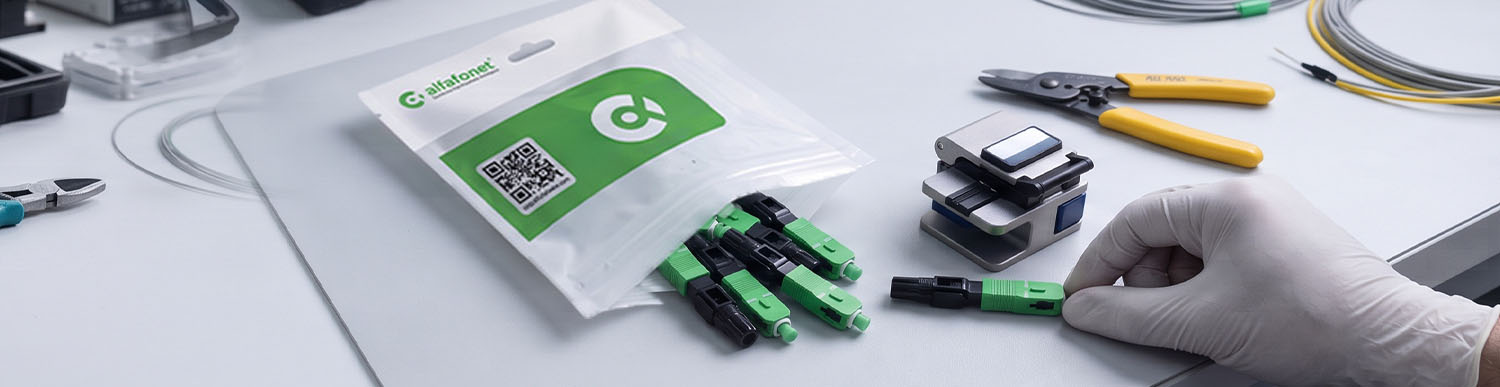
A fast connector is a type of connector that is mechanically fitted to the end of a fibre optic cable in the field without requiring a fusion splicer. Thanks to its pre-polished stub fibre and mechanical splicing mechanism, termination can be completed in just a few minutes. In this article, you will learn what a fast connector is, its advantages and types, the key selection criteria, and common mistakes to avoid.
In fibre optic infrastructure projects, on-site work and termination processes require speed and practicality. The cost of conventional fusion splicing equipment, its portability and the difficulty of accessing power supplies and equipment at every location often lead field technicians to consider alternative solutions. This is where fast connector technology stands out as a practical solution for fibre optic termination. In this guide, you will learn how fast connectors work, when they should be used and how to choose the right product.
Estimated reading time: 5 minutes
A fast connector is a type of connector that can be quickly fitted to the end of a fibre optic cable in the field without the need for a dedicated fusion splicer. It contains a short length of fibre, known as a stub fibre, that has been precisely polished at the factory, along with a mechanical splicing mechanism.
After the cable has been stripped and cleaved using the appropriate tools, the fibre is inserted directly into the mechanism inside the connector and secured in place. This allows a low-loss and reliable fibre termination to be achieved within a few minutes. Fibre optic connectors are designed to align fibre ends precisely, allowing optical signals to pass from one fibre to another with minimal loss.
To learn more about the general principles of fibre termination and other methods, such as fusion-spliced pigtails and mechanical splicing, read our guide, What Is Fibre Optic Termination? How Is It Done and Which Equipment Is Used?.
No fusion splicer required: There is no need to rely on expensive and precision-sensitive fusion splicing machines for every termination. Basic fibre preparation tools, such as a fibre stripper and cleaver, are generally sufficient.
Time savings: Termination can be completed in just a few minutes, reducing the time spent on site.
Easy use in confined spaces: Fast connectors are particularly useful in ceiling voids, narrow data rack spaces and residential FTTH installations where operating a fusion splicer may be difficult.
Straightforward training: Thanks to their mechanical design, technicians can become proficient in their use more quickly than with fusion splicing equipment.
The main fibre optic connector types are also available in fast connector versions. The most common options, depending on your project requirements, include:
SC fast connector: Commonly used for FTTH/GPON end-user connections and in residential and office fibre termination boxes. SC/APC versions, usually identified by their green housings and low back reflection, and SC/UPC versions, commonly identified by their blue housings, are both available.
LC fast connector: Featuring a 1.25 mm ferrule, this compact connector is suitable for applications where space is limited. It helps save space in data centres and patch panel installations.
For a comparison of connector types, including SC, LC, ST, FC and MPO, read our guide, Types of Fibre Optic Connectors: How to Choose the Right Connector.
When selecting a fast connector for your project, consider the following key criteria:
Device port and compatibility: Check the port configuration of the device to which the connector will be connected, such as an ONT, switch, patch panel or adapter. SC/APC connectors are commonly used in FTTH/GPON systems, but the final choice must match the active equipment's port requirements.
Fibre type (single-mode/multimode): Select a suitable connector according to whether your infrastructure uses single-mode or multimode fibre. For compatible adapters, explore our single-mode adapters and multimode adapters categories.
Polish type (UPC and APC): The polish type must match the rest of the link. APC and UPC connectors must never be directly mated, as this can increase signal loss and damage the ferrule surfaces.
Mechanical quality and manufacturer: Choose quality products that have been tested for reliable field installation and specified insertion-loss performance.
Connecting without cleaning: Even the smallest dust particle on the ferrule end face or cleaved fibre can cause signal loss and excessive attenuation. Always clean the relevant surfaces before connection.
Incorrect fibre cleaving: Poorly cleaved fibre ends reduce the quality of contact within the mechanical splice. Using a precision fibre cleaver is essential.
Neglecting dust caps: Protect unused connectors and those awaiting installation from contamination by fitting dust caps.
Excessive bending: Bending the cable too sharply where it exits the connector can cause the fibre to break internally.
Fast connectors are commonly chosen for applications where speed and ease of installation are priorities, including:
FTTH end-user connections: Terminating a cable on site when connecting a fibre optic outlet box or an ONT within a property.
Camera systems: Quickly terminating individual cable ends for cameras and network links.
Emergency field repairs: Restoring a connection quickly after a fault.
No. A fast connector can be installed without a fusion splicer, using basic tools such as a fibre stripper, cleaver and cleaning kit. Depending on the connector model, a small compression tool recommended by the manufacturer may also be required.
Fusion splicing generally provides lower loss. Fast connectors are suitable for applications where their loss performance is acceptable and speed and practicality are priorities. Fusion splicing is recommended for critical links and long-distance connections.
No. They must not be mated because their polish types differ. Doing so can increase signal loss and damage the ferrule surfaces.
Correct fibre cleaving and cleaning are essential. Poor cleaving and dust contamination are among the most common causes of signal-loss problems.
Fast connector technology offers a practical solution for FTTH projects, camera systems and emergency field repairs, providing advantages in installation speed and cost. When the correct connector type and polish are combined with careful installation, reliable, long-lasting fibre links with low signal loss can be achieved.
Explore our Fast Connectors and Fibre Optic Accessories categories to find suitable fibre optic accessories and connection components for your projects. For assistance with product selection, contact the Alfafonet team.
15.10.2026

Alfafonet SC/APC Fiber Optic Fast Connector 1 Pack - 10 Pieces

Alfafonet SC/UPC Fiber Optic Fast Connector 1 Pack - 10 Pieces




Alfafonet Complete Connectivity Solutions © 2026 All Rights Reserved.


0
)
