×

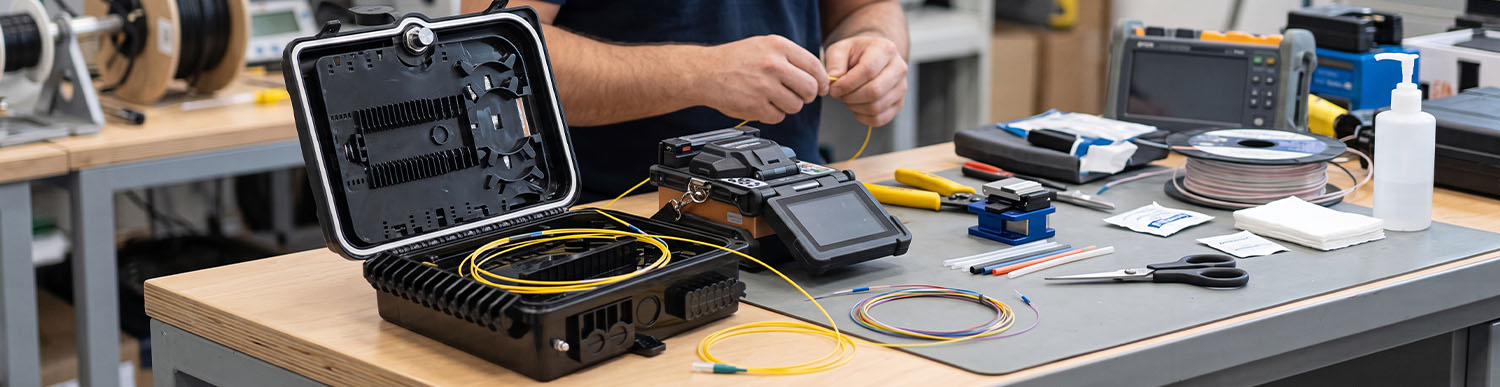
Fibre termination (fibre optic termination) is the process of connecting the end of a fibre optic cable to a connection point, such as a connector, pigtail or patch panel, with minimal signal loss. It can be carried out using three methods: fusion splicing with a pigtail, FAST connectors and mechanical splicing. The process requires equipment such as a fusion splicer, hand tools, adapters, splice trays and termination boxes. This guide explains the methods, step-by-step procedures and how to choose the right equipment.
When installing fibre optic infrastructure, how the cable ends are terminated is just as important as the cable itself. Regardless of the cable's quality, an improperly terminated end can cause signal loss, connection dropouts and slower network performance. This process is known as fibre optic termination, or simply fibre termination. In this guide, you will learn what fibre optic termination is, which methods are used, how to carry it out step by step and what equipment is required.
Estimated reading time: 7 minutes
Fibre optic termination, also known as fibre cable termination, is the process of connecting the end of a fibre optic cable securely to a connection point, such as a connector, pigtail or patch panel, with minimal signal loss. The aim is to connect the glass cores inside the cable to network equipment such as devices, switches and ONTs, or to another cable, while minimising optical loss.
The end of an unterminated fibre optic cable consists of bare glass. It cannot be connected directly to a device or adequately protected against external factors. Termination protects the fibre end, provides a standard interface (such as LC, SC, ST or FC) and makes it ready for connection to network equipment.
If you have not yet explored how fibre optic cables work and where they are used, read our guide: What Is a Fibre Optic Cable? How Does It Work and What Is It Used For?
As fibre optics transmit signals using light, even a tiny speck of dust, a scratch or incorrect alignment can reduce performance. Proper termination provides the following benefits:
Low insertion and return loss: Optical signals are transmitted with minimal loss.
Long-lasting connections: The fibre end is protected against mechanical damage and moisture.
Organised infrastructure: Cables are labelled and arranged neatly in panels and enclosures, making them easier to manage.
Easier maintenance and expansion: Adding new devices and troubleshooting faults become much simpler.
Three main methods are commonly used in the field. The choice depends on the budget, cable length and required performance level.
This is the most common method and generally provides the lowest loss. A fibre optic pigtail, which has a pre-terminated connector at one end, is fusion-spliced to the fibre in the cable using an electric arc. The splice point is protected with a splice protector and placed in a splice tray. This method is preferred for projects where performance is critical, such as telecommunications networks, building backbones and data centres.
FAST connectors allow the fibre end to be connected directly to a connector in the field. As no fusion splicer is required, this is a practical solution for small-scale jobs, individual fibre terminations and situations where investing in specialised equipment is not desirable. However, loss values may be slightly higher than those achieved with fusion splicing.
Two fibre ends are joined inside an alignment mechanism containing gel. This method is suitable for quick repairs and temporary solutions. However, fusion splicing is generally preferred for long-term, high-performance connections.
The following steps summarise the most commonly used method: fusion-spliced pigtail termination. For actual projects, always follow the manufacturer's instructions and applicable health and safety requirements.
1. Preparing the cable: Strip the outer cable sheath to the required length for splicing. Remove protective layers such as armour, Kevlar and gel. Take the fibres out of the loose tubes and route them towards the splice tray.
2. Stripping and cleaning the fibre: Remove the acrylate coating from the fibre using a dedicated fibre stripper. Clean the bare glass with 99% isopropyl alcohol and lint-free wipes.
3. Cleaving the fibre: Use a fibre cleaver to cut the fibre end cleanly, at an angle as close to 90 degrees as possible. Poor cleaving is one of the main causes of high splice loss.
4. Fusion splicing: Place the pigtail and cable fibre in the fusion splicer. The machine aligns the fibres, fuses them together using an electric arc and displays the estimated splice loss.
5. Protecting the splice point: Cover the splice with a splice protector, secure it in the heater and place it in the splice tray.
6. Connecting to the adapter and mounting the panel: Connect the pigtail connector to a fibre optic adapter. Arrange the entire assembly inside a patch panel or termination box.
7. Testing and labelling: Test the link using an optical power meter, light source or OTDR. Record the results and label each port.
The fusion splicer is the most critical device used for field termination, but the process requires a set of tools and components rather than a single piece of equipment.
The following hand tools are commonly used for fibre termination in the field:
Cable jacket stripping tool
Fibre stripper
Kevlar scissors
Fibre cleaver
Cleaning kit (isopropyl alcohol and lint-free wipes)
Marker pen, tape and carrying case
The tools required depend on the termination method. Fusion splicing also requires a fusion splicer. For FAST connector termination, the connector and a basic crimping or fastening tool may be sufficient, depending on the connector design.
Equipment | Function |
|---|---|
A short cable with a connector at one end, fusion-spliced to the main cable | |
A cable with connectors at both ends, used to connect a panel to a device | |
Connects two opposing connectors (singlemode / multimode) | |
An enclosure for safely organising spliced fibres | |
Protects the splice point against mechanical damage | |
Protects unused connectors and adapters from dust |
The termination location depends on the scale of the project and the installation environment:
Rack-mounted, high-port-count installations: Fibre optic patch panels, such as the OptiSlide and EcoSlide ranges, are used.
Wall-mounted installations: Wall-mounted fibre optic panels and metal or plastic termination boxes are suitable options.
End-user locations (homes and offices): Fibre optic outlet boxes and internal termination boxes are suitable.
Outdoor environments and field splices: Fibre optic splice closures and outdoor termination boxes are used.
Industrial panels: DIN rail termination boxes allow easy installation inside control panels.
Explore all available options in the Fibre Termination Units category.
The fibre cable entering a flat from the building's main connection point is terminated inside a fibre optic outlet box. The cable end is either spliced to a pigtail or terminated with a FAST connector. A short patchcord then connects it to the modem or ONT.
It is important not to bend the fibre excessively inside the box and to keep unused connectors capped. If the line belongs to a telecommunications operator, we recommend checking its requirements before carrying out any work on the internal installation.
Skipping the cleaning process: Dust on the connector or fibre end is one of the most common causes of signal loss. Clean connectors before each connection.
Poor cleaving: An improperly cleaved fibre can result in high loss during fusion splicing.
Excessive bending: Bending the fibre below its minimum bend radius can cause signal loss and breakage.
Using incompatible adapters and fibre types: Mixing singlemode and multimode products can significantly reduce performance.
Skipping testing and labelling: An untested link can lead to time-consuming troubleshooting when problems arise.
Before starting a project, identify the fibre type (singlemode or multimode), core count, connector standard and installation environment. These choices directly affect both the termination method and the budget. For cost planning, refer to our guide: Fibre Optic Cable Prices: Features That Affect Costs and Cable Selection.
If you want to extend an existing line to a new location, we recommend reading our guide on splicing and extension solutions: Extension Cables Guide: How to Extend a Fibre Optic Cable.
Can I carry out fibre optic termination myself?
Basic FAST connector termination can be carried out with the right equipment and training. However, fusion splicing and multi-core fibre installations require specialist knowledge, appropriate equipment and testing devices. For critical connections, professional assistance is the safer option.
Is a fusion splicer essential for fibre optic termination?
No. Termination can be carried out without a fusion splicer using FAST connectors or mechanical splices and simpler hand tools. However, fusion splicing is recommended for projects requiring low signal loss and long-term reliability.
What is the difference between a pigtail and a patchcord?
A pigtail has a connector at only one end and is spliced to the main cable. A patchcord has connectors at both ends and is used to connect devices.
Which tests should be carried out after termination?
Loss measurements can be performed using an optical power meter and light source, while an OTDR can be used to analyse splice points, connectors and potential breaks along the fibre link.
Fibre optic termination combines the right method, suitable equipment and careful installation. By selecting components such as pigtails, adapters, splice trays, patch panels and termination boxes according to your project's requirements, you can build a reliable, high-performance and manageable network infrastructure.
Find suitable termination products in the Alfafonet Fibre Termination Units and Fibre Optic Accessories categories. You can also contact the Alfafonet team for assistance with product selection.




Alfafonet Complete Connectivity Solutions © 2026 All Rights Reserved.


0
)

