×

A fibre optic connector is a component that allows the end of a fibre optic cable to be connected to devices and other cables. The most common connector types are SC, LC, ST, FC and multi-fibre MTP/MPO connectors. Each differs in size, connection mechanism and application. The right choice depends on the device port, fibre type (single-mode or multimode) and polish type (UPC or APC). In this guide, you will learn about the different fibre optic connector types, their differences and the key selection criteria.
Connection and splicing points are among the main sources of signal loss in fibre optic infrastructure. Therefore, choosing the right connector, as well as the right cable, directly affects network performance and service life. With dozens of models available on the market, the question “Which connector should I use?” is a common one. In this guide, we explain the different types of fibre optic connectors, their differences and how to choose the right connector for your project, step by step.
Estimated reading time: 7 minutes
A fibre optic connector is a connection component fitted to the end of a fibre optic cable. It allows the cable to be quickly connected to or disconnected from a device, adapter or another cable. Fibre optic cable connectors are designed to align the extremely thin glass core that carries light with the fibre on the opposite side as accurately as possible.
A connector consists of the following main components:
Ferrule: A cylindrical component, usually made of ceramic, that holds and aligns the fibre.
Housing: The outer structure that holds the ferrule and provides the connection and disconnection mechanism.
Boot: A component that protects the fibre against excessive bending where the cable enters the connector.
Connectors do not work independently; two connectors mate face-to-face through a fibre optic adapter. If you would like to learn how a connector is attached to the end of a cable, read our guide, What Is Fibre Optic Termination? How Is It Done and Which Equipment Is Used?. For an introduction to fibre optic cables themselves, see our article, What Is Fibre Optic Cable? How Does It Work and What Is It Used For?.
Fibre optic connectors are classified according to their size and connection mechanisms. The following are the connector types most commonly encountered in the field.
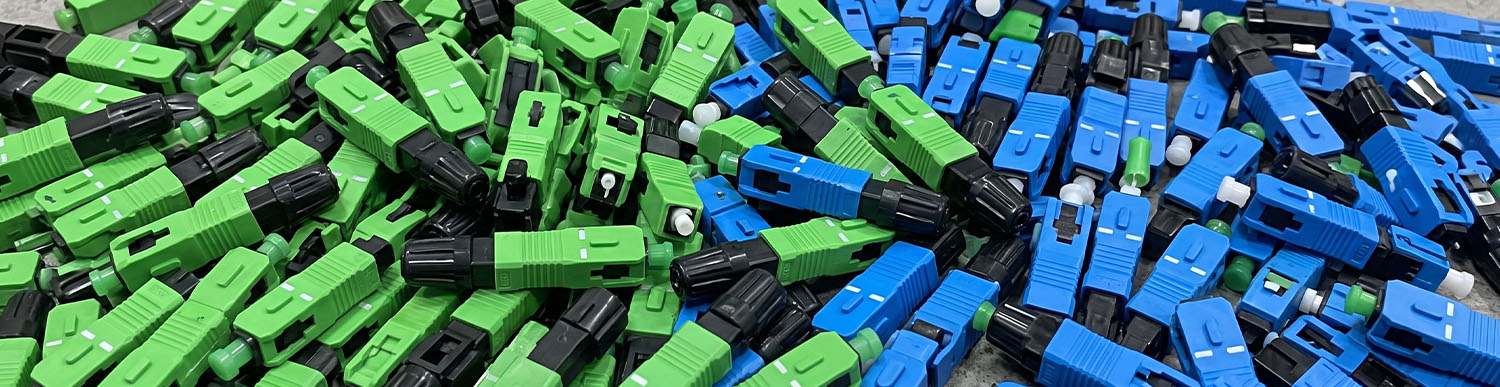
SC (Subscriber Connector) is a square-bodied connector that uses a push-pull connection mechanism. It has a 2.5 mm ferrule. As it is easy to connect and disconnect, it is widely used in telecommunications infrastructure, FTTH and GPON networks, and patch panels. In Türkiye, SC connectors with APC polishing are among the most commonly encountered types in residential and office fibre connections.
LC (Lucent Connector) is approximately half the size of an SC connector and uses a 1.25 mm ferrule. It features a locking tab similar to that of an RJ-45 connector. Its compact size allows more ports to fit into the same panel space, making it a popular choice for SFP and SFP+ modules, switches and data centres. LC connectors are commonly used in duplex configurations, which carry two fibres.
ST (Straight Tip) uses a bayonet locking mechanism. Once inserted, the connector is rotated to secure it in place. It has a 2.5 mm ferrule. ST connectors are primarily found in multimode installations, older campus and in-building networks, and industrial environments.
FC (Ferrule Connector) has a metal body and a threaded screw-on connection. Its secure fastening provides a reliable connection in environments subject to vibration. FC connectors are used in test and measurement equipment and certain telecommunications applications.
MTP/MPO connectors use a multi-fibre design that carries 12 or 24 fibres in a single connector. They are used in high-speed data centre backbones, including 40G and 100G networks, and in high-density cabling installations. They are less commonly required in standard network installations. MPO is the name of the general standard, while MTP is a proprietary implementation of this standard designed to offer enhanced performance.
Comparison of Connector Types
| Connector | Ferrule Diameter | Connection Mechanism | Typical Applications |
|---|---|---|---|
| SC | 2.5 mm | Push-pull | FTTH, GPON, telecommunications panels |
| LC | 1.25 mm | Latch mechanism (RJ-45 style) | SFP/SFP+ modules, switches, data centres |
| ST | 2.5 mm | Bayonet (twist-lock) | Multimode, industrial and older campus networks |
| FC | 2.5 mm | Threaded metal body | Vibration-prone environments, test and measurement equipment |
| MTP/MPO | Multiple fibres (12–24) | Push-pull | 40G/100G/400G backbones, high-density panels |
Ready-made connectorised products featuring SC, LC, ST and FC connectors are available in our fibre optic pigtail and fibre optic patch cord categories.
The way the ferrule end face is polished is just as important as the connector type. The terms PC, UPC and APC used in connector names indicate the type of polish.
PC / UPC: The ferrule end face is flat with a slight curvature. UPC connectors are commonly identified by their blue housings and are widely used in data networks.
APC: The ferrule end face is angled at approximately 8 degrees, and the housing is generally green. APC connectors reduce back reflection, making them suitable for GPON/FTTH networks and systems sensitive to reflected light.
Important: Do not connect APC and UPC connectors to each other. Their different end-face angles can increase signal loss and damage the ferrule surfaces. For example, an SC/APC connector should not be mated with an SC/UPC connector in the same adapter or connected directly to a UPC port.
The connector must be compatible with the type of fibre being used. Single-mode fibres carry light along a single propagation mode, requiring precise alignment. UPC or APC polishing is generally used, depending on the application. Multimode fibres typically use PC or UPC polishing rather than APC, as angled polishing is generally unnecessary for these applications.
Single-mode cables are usually identified by their yellow outer jackets. OM3 multimode cables commonly have aqua (light blue) jackets, while OM4 multimode cables are often violet.
Mixing single-mode and multimode fibres can result in significant signal loss. For the correct match, explore our single-mode adapters and multimode adapters categories separately.
There are three main methods for terminating a connector at the end of a cable:
Pre-terminated products: Pigtails or patch cords with factory-installed connectors are used. A pigtail is joined to the cable fibre using fusion splicing, while a patch cord has connectors at both ends and can be connected directly to equipment.
Field-installable (FAST) connectors: The fibre end is inserted directly into the connector, without requiring a fusion splicer. FAST connectors offer a practical solution for terminating individual fibre ends in the field.
Fusion-spliced connections: A pigtail is fusion-spliced to the fibre in the cable using a fusion splicer. This method provides very low splice loss.
If you need to terminate fibre without using a fusion splicing machine on site, take a look at our guide to what a fast connector is, how to choose one and how to use it.
Follow these steps when selecting a connector for your project:
Device port: Check which connector type is supported by your switch, SFP module or ONT. SFP modules commonly use LC connectors, while GPON/FTTH equipment often uses SC/APC connectors.
Fibre type: If your line uses single-mode fibre, choose a compatible single-mode connector. For multimode fibre, select a connector suitable for the relevant OM grade.
Polish type: Ensure that both ends of the link and the adapter use matching polish types (UPC or APC).
Port density: If many connections need to fit into the same panel, smaller connectors such as LC can save space.
Operating environment: Consider conditions such as vibration, moisture and frequent connection and disconnection.
Termination method: A pigtail may be suitable when fusion splicing is planned, while a FAST connector may be preferable when a quick field connection is required.
Panel and adapter compatibility: Ensure that the fibre optic patch panel and adapters you intend to use match the connector type.
If you need to extend an existing fibre link to a more distant location, the methods covered in our Extension Cables Guide: How to Extend a Fibre Optic Cable may also be useful.
The cost of a connector depends on several factors rather than a single element. The main considerations include:
Connector type and ferrule quality
Polish type (UPC or APC) and single-mode/multimode compatibility
Whether pre-terminated products or field-installable connectors are used
Quantity per pack and intended application
Required adapters, panels and accessories
Although a low-quality connector may appear economical at first, higher signal loss and an increased risk of faults can make it more expensive in the long run. For general cost planning, see our article, Fibre Optic Cable Prices: Factors Affecting Cost and Cable Selection.
Mixing UPC and APC connectors: This can increase signal loss and damage the ferrule surfaces.
Connecting without cleaning: Dust on the ferrule end face is a common cause of signal loss. Clean the connector before connecting it.
Leaving out dust caps: Cover unused connectors and adapters with dust caps.
Bending the fibre excessively: Fibre can break if it is pinched or bent too sharply where it exits the connector.
Using incompatible adapters: The connector type, fibre type and polish type must be compatible with the adapter.
There is no single correct answer. The choice depends on the device port, fibre type and polish type. LC connectors are commonly used with switches and SFP modules, while SC/APC connectors are widely used in GPON/FTTH applications. Check your device's technical documentation before making a decision.
SC and LC are two of the most widely used types today. SC connectors are more common in telecommunications and FTTH networks, while LC connectors are widely used in data centres and with SFP-based equipment.
SC connectors are larger, with a 2.5 mm ferrule, and use a push-pull connection mechanism. LC connectors are approximately half the size, with a 1.25 mm ferrule, and use a latch mechanism. Their smaller size allows more ports to fit into the same space.
No. Their end-face angles differ, and connecting them together can increase signal loss and damage the ferrule surfaces.
The right fibre optic connector should be selected according to the device port, fibre type, polish type and operating environment. SC and LC connectors are suitable for many standard applications, while ST, FC and MTP/MPO connectors meet more specialised requirements. Choosing a connector that is compatible with the rest of the link, including the adapter, panel and cable, helps reduce signal loss and simplify maintenance.
Explore suitable products in our Fibre Optic Accessories category. For help selecting the right products for your project, contact the Alfafonet team.
15.10.2026

Alfafonet SC/APC Fiber Optic Fast Connector 1 Pack - 10 Pieces

Alfafonet SC/UPC Fiber Optic Fast Connector 1 Pack - 10 Pieces




Alfafonet Complete Connectivity Solutions © 2026 All Rights Reserved.


0
)
